
Gavin@mingspak.com
+8613809623005
In late autumn 2025, an inquiry arrived in the Alibaba message center. It came from Cartier's procurement department, and the sender signed off as "James." The inquiry was brief: he was interested in our high-end jewelry gift box line, with particular attention to special craftsmanship and color processing capabilities.
Three days later, we had an in-depth conversation. James opened in a relaxed tone: "Your boxes remind me of something interesting." But what followed showed his professionalism and focus on packaging.
He began with color. "Why do people remember Cartier's red box?" he asked. I noted that Cartier red is not a true red but a vintage-leaning, slightly dark red with extremely high recognizability. James then asked about mass-production reproducibility—red is precisely one of the hardest colors to reproduce in printing. We gave him the key answer: spot-color deviation control of ΔE ≤ 1.5 (the luxury standard), and we showed batch color-deviation data for red-series orders over the past six months, all converging within 1.2. This data came from the incoming inspection mechanism we established for paper roll whiteness—each roll of soft-touch paper had its whiteness tolerance controlled within ±1.5 points. James had clearly done his homework and immediately asked about the choice of Soft-touch Lamination. We told him that the outer layer of the gift box uses high-density grey board laminated with spot-color soft-touch paper, giving it a velvety, delicate feel in the hand, while the surface is suitable for subsequent processes such as foil stamping and embossing. He nodded in approval.
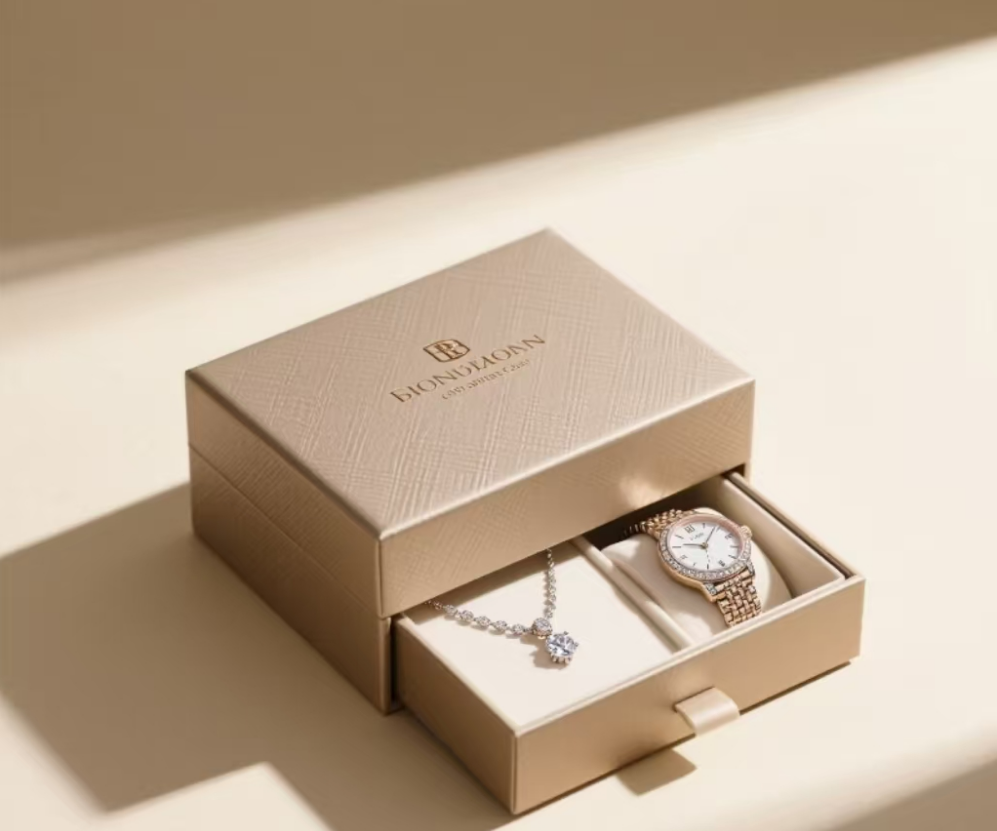
In the second week, James sent an email with a detailed supplier evaluation form attached. Cartier required that red shopping bags use FSC- or PEFC-certified paper, and that the covering paper for red boxes contain 50% recycled fiber.
The real turning point came at the sample stage. James put forward a seemingly contradictory requirement: the gift box had to be "elegant and understated," in line with Cartier's design temperament and philosophy, while also delivering "a moment of surprise when opened." This meant finding a precise balance between minimalism and ritual.
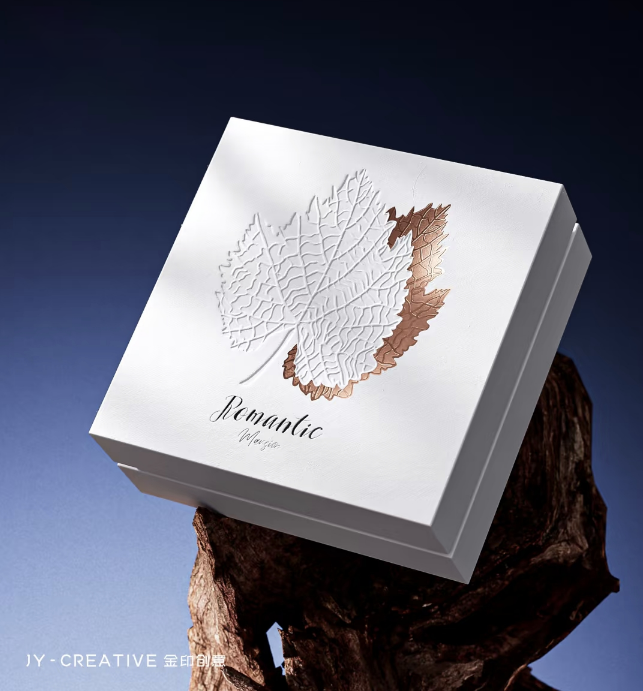
The final solution we settled on revolved around three core techniques. First, we used spot-color printing to lock in the brand's red base, applying a combination of matte film and soft-touch lamination so that the box surface had a fine, warm, tactile feel within its matte finish. Then, in the brand logo area, we used embossing, with the raised height controlled at 0.3–0.5 mm, so that the logo formed a natural shadow under light—three-dimensional yet restrained. Finally, we added foil stamping in selected areas, combining it with embossing in a one-step "embossed foil" effect. The metallic reflection and three-dimensional contour naturally drew the visual focus to the brand memory point at the moment the box was opened. The entire surface process aligned closely with search terms such as Matte Lamination, Soft-touch Finish, and Foil Stamping, which continue to rise on Google Trends.
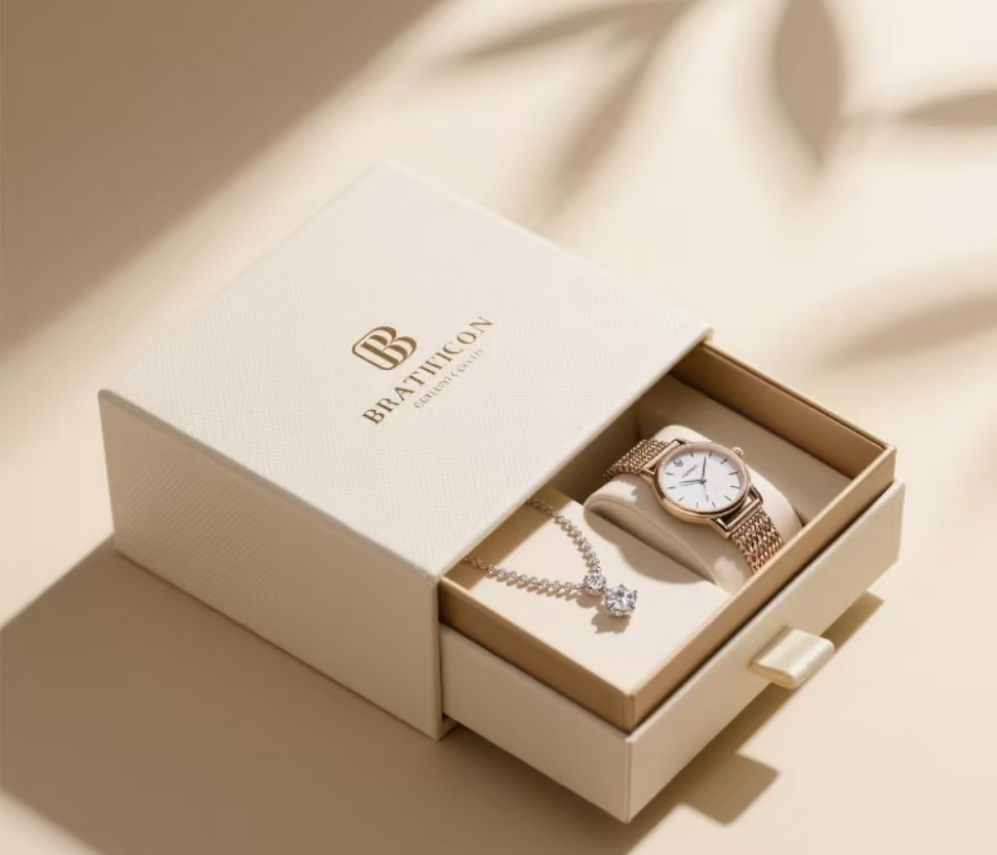
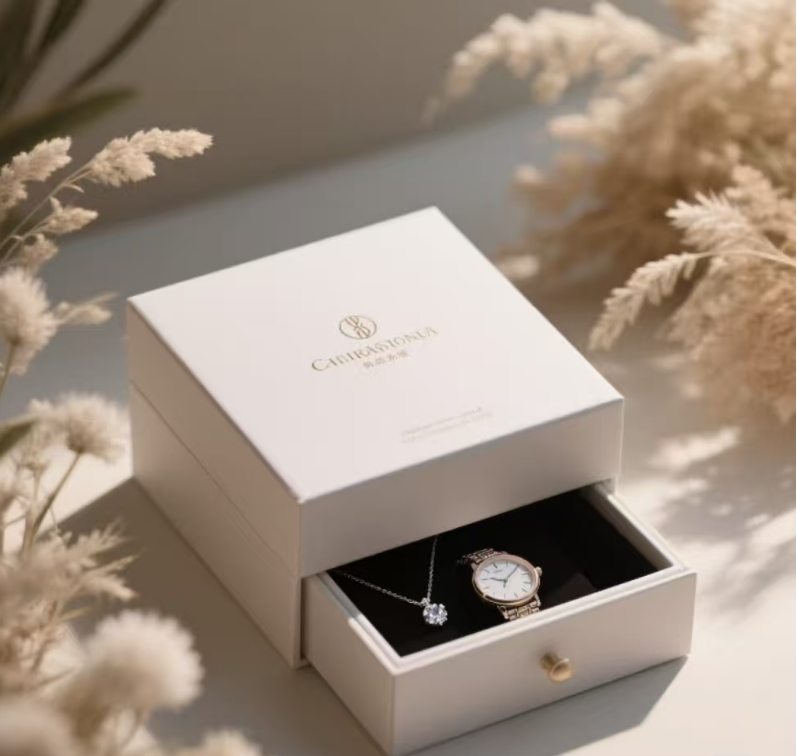
The interior lining also went through repeated adjustments. Although traditional velvet foam offers excellent texture, it is not recyclable. We adopted a fully recyclable Eco Sponge solution containing more than 25% recycled content. Its feel is comparable to traditional velvet, and it is FSC-certified, meeting Cartier's core requirements for a sustainable supply chain. For the box body, we used a double grey board structure, with thickness tolerance controlled within ±0.1 mm, ensuring a uniform opening gap between the lid and the base. From color management to structural tolerance, from surface touch to interior cushioning, every step had a quantifiable standard to follow.
In the third week, we received James's reply. He acknowledged the sample's performance in color consistency and tactile layering, and was especially satisfied with the registration precision of embossing and foil stamping. He then asked a practical question: could small-volume customization maintain the same level of quality control? We gave a definite answer—free samples, low minimum order quantity, and a batch-specific spot-color inspection report issued with each shipment.
The order was finally placed. After the first batch of gift boxes was delivered, James wrote at the end of his email: "The box feels right. You understand what elegance means in our language."
Contact: Gavin
Phone: +8613809623005
E-mail: Gavin@mingspak.com
Whatsapp:+8613809623005
Add: 11#,Chuangsheng Road,Changan Town, Dongguan City, Guangdong Province,China 523867
We chat
